What is grain pneumatic conveying
Release time:2024-5-4
1、 Basic principles
The grain pneumatic conveying system utilizes the pressure or velocity difference of the airflow to transport bulk materials such as grains through pipelines to their destination. During the transportation process, the airflow suspends the material, forming a mixed flow of material and gas, and then transports it to the designated location through pipelines.
2、 System composition
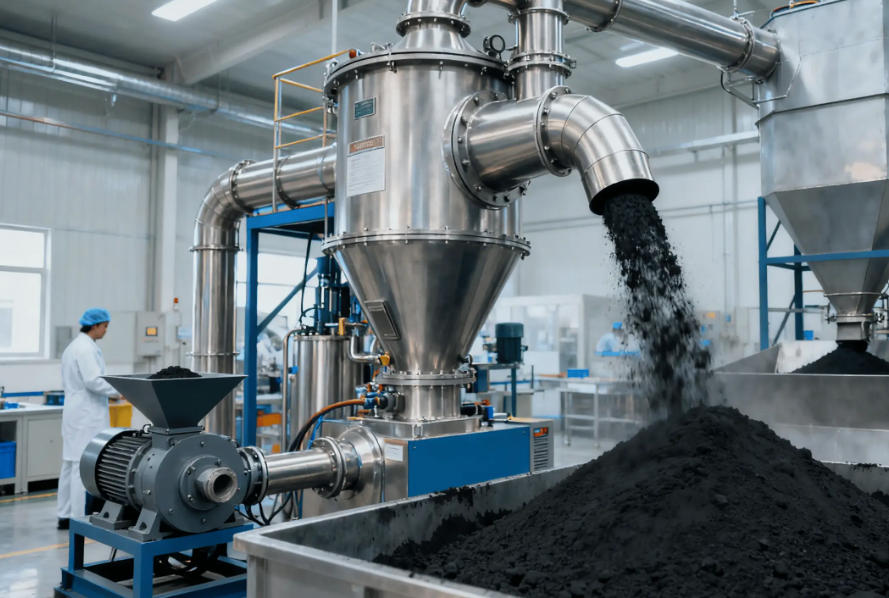
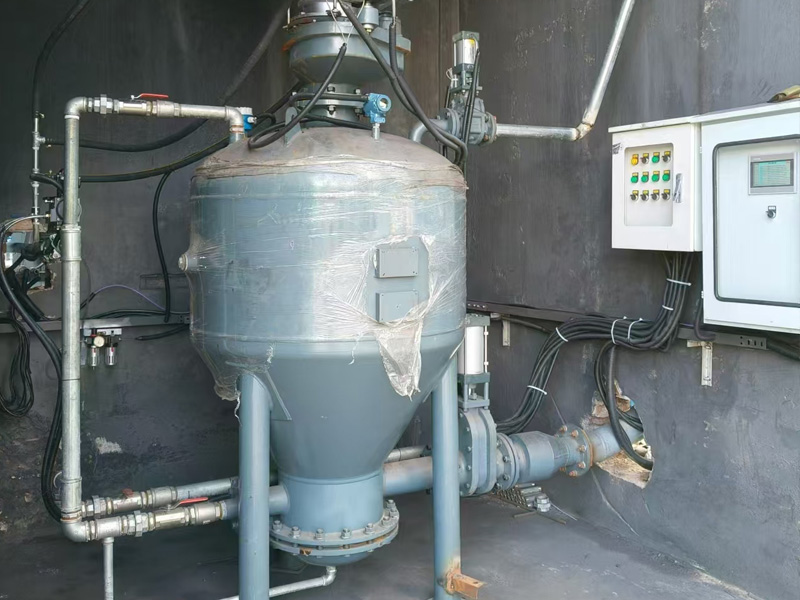
The grain pneumatic conveying system mainly consists of the following parts:
Air source equipment: such as Roots blowers, air compressors, etc., providing stable airflow power.
Conveyor pipeline: a sealed pipeline system used to guide airflow and transport grains. The pipeline material must meet the requirements of corrosion resistance, wear resistance, etc.
Feeding device: such as suction nozzle, transmitter, etc., used to suck grains from the storage bin and feed them into the conveying pipeline.
Dust removal equipment: used to remove dust from the airflow and maintain environmental cleanliness. Dust removal equipment usually includes dust collectors, bag filters, etc.
Control device: including valves, sensors, PLC control system, etc., used to regulate the pressure and flow rate of the airflow, monitor the conveying status, and achieve automation control.
3、 Transportation process
The conveying process of grain pneumatic conveying is roughly as follows:
Loading: Grains are stacked in the storage bin above the feeding device, sucked in through the feeding device, and sent into the conveying pipeline.
Acceleration and transportation: In the transportation pipeline, the airflow accelerates the grains and pushes them along the pipeline. Grains form a suspended or stacked state under the action of airflow and move along the pipeline towards their destination.
Control and regulation: By adjusting the pressure and flow rate of the airflow through the control device, the stability and accuracy of the conveying process are ensured. At the same time, sensors monitor the conveying status in real-time, such as pressure, temperature, flow rate and other parameters, and provide feedback to the PLC control system.
Reception and Separation: At the end of the transportation, the grains are collected by the receiving device. The receiving device may include equipment such as separators and dust collectors to remove impurities from the airflow and collect pure grains.
4、 Characteristics and advantages
Efficiency: Pneumatic conveying can achieve continuous and stable material transportation, improving production efficiency.
High degree of automation: Through advanced equipment such as PLC control system, the automation control of the conveying process is achieved, reducing manual intervention.
Pollution free: The transportation process is carried out in a closed pipeline, reducing dust pollution and environmental pollution.
Space saving: Compared to traditional mechanical conveying methods, pneumatic conveying takes up less space, which is beneficial for saving factory space.
5、 Application examples
Grain pneumatic conveying has a wide range of applications in the grain processing industry. For example, in the cleaning workshop of a rice or flour mill, a pneumatic conveying system is used to transport and clean grains, which can remove some light impurities such as deflated wheat, deflated grains, wheat husks, and husks, as well as the vast majority of impurities such as mud and sand; In the rice milling section of the rice mill, materials such as husks and bran can be further separated. In addition, grain pneumatic conveying is widely used in fields such as grain storage and transportation.
BROWSE:
The last one